A civilian helicopter costs more per flight hour than most people spend on rent. That single fact explains why so few buyers make the decision casually, and why a thorough helicopter review matters more than a glossy brochure ever could. Rotorcraft ownership sits at the intersection of engineering complexity, regulatory weight, and genuine operational risk - three factors that make an uninformed purchase far more costly than a mistimed car deal.
Yet demand keeps climbing. Flight schools report waiting lists, charter operators expand fleets, and private buyers increasingly see helicopters as a practical answer to congested roads rather than a luxury indulgence. For anyone weighing hours in the air against the price of admission, even browsing something as unrelated as a helicopter x review on a gaming platform reveals how much public fascination surrounds rotor-driven flight, fictional or real. That curiosity, translated into serious research, is where this guide begins.
What follows is a structured breakdown of the models worth considering, the performance metrics that actually predict ownership satisfaction, and the features that separate a workhorse from a liability. The intent is not to sell a dream - it is to equip a buyer with the same working knowledge a seasoned pilot or broker would use before signing anything.
Understanding What Makes a Helicopter Review Trustworthy
Not every helicopter review carries equal weight. Marketing material dressed up as editorial content is common in aviation media, and distinguishing genuine assessment from sponsored praise takes a trained eye.
Sources Worth Reading vs. Sources to Skip
Independent aviation publications that disclose testing methodology, pilot logbooks from actual owners, and maintenance forums where problems get aired publicly tend to produce more reliable information than manufacturer press kits. A review that only lists specifications without discussing handling quirks or maintenance headaches has skipped the part that matters most.
What a Credible Review Actually Measures
A trustworthy assessment covers flight characteristics across different conditions, not just a single demo flight in ideal weather. It addresses parts availability, resale patterns, and how the aircraft behaves after several hundred hours - not just fresh off the line.
Red Flags in Aviation Marketing Content
Vague superlatives without supporting data, an absence of any mentioned drawback, and reviews published exclusively by dealers should raise suspicion. Genuine evaluations always include at least one limitation, because no aircraft is flawless.
Best Helicopter Models Across Different Categories
There is no single "best" helicopter - only the best fit for a given mission profile. Splitting the market into categories makes comparison meaningful rather than abstract.
Top Picks for Personal and Recreational Flying
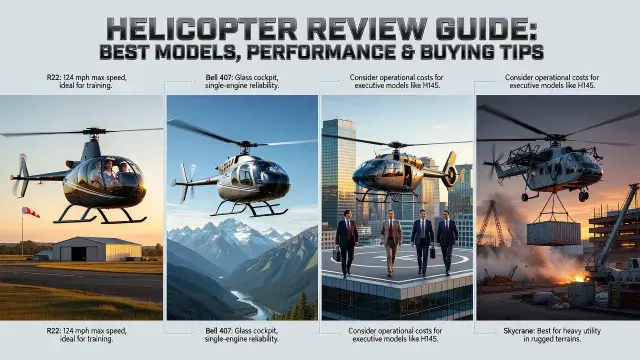
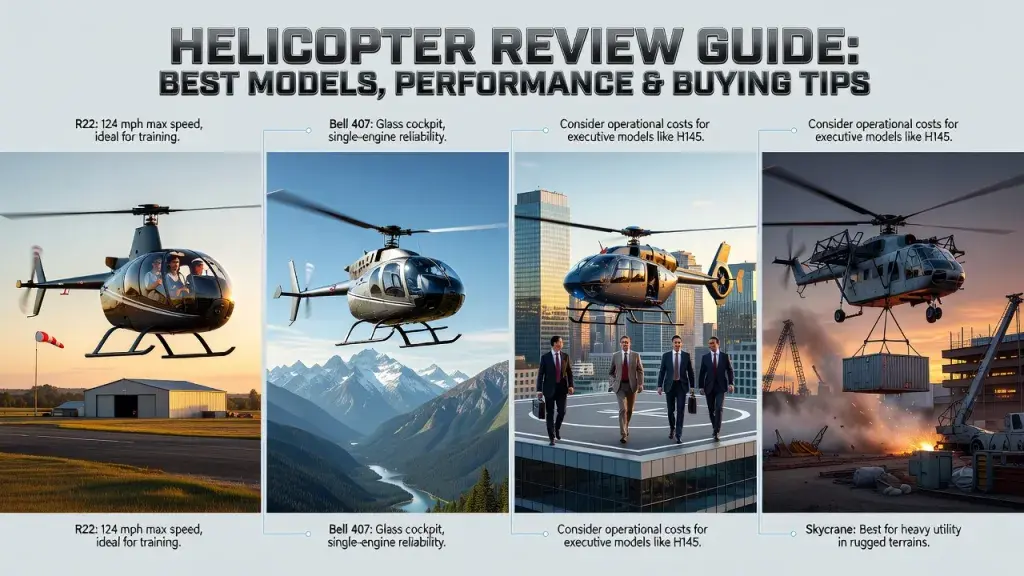
Light piston-powered helicopters dominate this segment because of lower acquisition and operating costs. Buyers here typically prioritize simplicity of maintenance and forgiving handling over raw speed or range, since most flights are local and recreational rather than mission-critical.
Best Options for Business and Executive Transport
Turbine-powered light and medium twins serve this niche well, offering the reliability of dual engines and cabin comfort suited to client-facing use. Executives value predictable dispatch reliability more than any other single factor, since a grounded aircraft during a scheduled meeting undermines the entire purpose of owning one.
Leading Choices for Utility and Commercial Operations
Operators running agricultural spraying, aerial survey, or cargo lift work need airframes built around payload capacity and structural durability rather than cabin refinement. These models tend to have simpler interiors but far more robust drivetrains, because downtime translates directly into lost revenue.
- Piston trainers - best for flight schools and hobbyist pilots
- Light turbine singles - balance of cost and capability for private owners
- Medium twins - favored for corporate and VIP transport
- Heavy utility models - built for lifting, firefighting, and industrial work
Helicopter Performance Review: Metrics That Actually Matter
Specification sheets list numbers, but a genuine helicopter performance review interprets what those numbers mean in daily operation. Two aircraft with similar top speeds can behave completely differently under real-world load.
Speed, Range, and Fuel Efficiency
Cruise speed matters less than usable range under realistic payload. A helicopter that hits impressive top speed empty but loses a third of its range with four passengers and luggage aboard is not delivering the performance its brochure implies. Fuel burn per hour, cross-referenced against actual mission length, gives a far more honest picture of operating cost.
Payload Capacity and Load Handling
Useful load - the weight available for fuel, passengers, and cargo combined - separates capable aircraft from ones that look good on paper. Buyers frequently underestimate how quickly useful load evaporates once full fuel tanks and two adults are factored in.
Stability, Handling, and Pilot Feedback
Vibration levels, autorotation characteristics, and control responsiveness in gusty conditions come almost entirely from pilot testimony rather than spec sheets. This is precisely where firsthand accounts outperform manufacturer data, and why cross-referencing multiple pilot reports before purchase is worth the extra research time.
Helicopter Features Comparison: What Sets Models Apart
Once performance basics are settled, a detailed helicopter features comparison reveals which aircraft actually suit day-to-day use rather than just the mission brochure describes.
Cockpit Avionics and Automation Levels
Glass cockpits with integrated flight management systems reduce pilot workload substantially compared to older analog gauges, but they also raise repair costs when something fails. Buyers should weigh the safety benefit of modern avionics against the higher cost of eventual electronics servicing.
Cabin Comfort and Interior Configuration
Soundproofing quality, seat configuration flexibility, and climate control differ enormously between models aimed at executive transport versus those built for utility work. A cabin optimized for hauling cargo will feel spartan and loud compared to one designed around passenger comfort.
Safety Systems and Redundancy Features
Dual hydraulic systems, crash-resistant fuel tanks, and redundant electrical buses matter far more over a long ownership period than any convenience feature. These systems rarely get mentioned prominently in marketing but consistently show up in accident investigation reports as decisive factors.
Helicopter Buying Guide: Steps Before You Sign
A structured helicopter buying guide protects buyers from the two most common mistakes: underestimating total ownership cost and skipping independent inspection.
New vs. Used: Weighing the Real Costs
New aircraft come with warranty coverage and current avionics but depreciate quickly in the first few years. Used models, particularly those with documented maintenance history and mid-life overhauls already completed, often deliver better value per flight hour despite the absence of a warranty.
Inspection and Maintenance History Checklist
Airframe logbooks, engine overhaul records, and any history of hard landings or incident repairs deserve line-by-line review before any offer is made. An independent mechanic unaffiliated with the seller should always perform a pre-purchase inspection, regardless of how clean the paperwork looks.
Financing, Insurance, and Ongoing Ownership Costs
Insurance premiums for rotorcraft run considerably higher than for fixed-wing aircraft of similar value, largely due to higher hull-loss risk. Buyers should budget for hangar fees, scheduled inspections, and unscheduled component replacement as a percentage of purchase price annually, not as an afterthought.
- Verify total time on airframe and engine separately
- Confirm compliance with all applicable airworthiness directives
- Request maintenance records going back to the aircraft's original delivery
- Budget for insurance before finalizing financing terms
Making the Final Decision: Matching Model to Mission
Every prior section feeds into one final question: which aircraft actually matches the buyer's real flying pattern, not their aspirational one.
Defining Your Primary Use Case
Buyers who plan mostly weekend recreational flights over-invest when they choose a heavy twin built for commercial dispatch reliability. Being honest about actual annual flight hours prevents both overspending and underbuying.
Balancing Budget Against Long-Term Value
The lowest purchase price rarely represents the lowest total cost. Parts availability, mechanic familiarity with the type, and resale demand all factor into what an aircraft truly costs across a decade of ownership.
Frequently Asked Questions
How much does it typically cost to operate a light helicopter per flight hour?
Direct operating costs for a light piston helicopter generally include fuel, scheduled maintenance reserves, and engine overhaul reserves, which together often land in a range comparable to running a mid-size private aircraft. Insurance and hangar fees add substantially on top of that hourly figure and should be calculated separately as fixed annual costs.
Is it better to buy a new helicopter or a well-maintained used one?
A used helicopter with documented maintenance history and a recent overhaul frequently offers better value, since depreciation on new aircraft is steepest in the first several years. New aircraft make more sense for buyers who need current-generation avionics or want full warranty coverage during initial ownership.
What's the biggest mistake first-time helicopter buyers make?
Underestimating ongoing costs beyond the purchase price is the most common error. Buyers focus on the sticker price and overlook insurance, hangar storage, recurrent training, and the reserve funds needed for major component overhauls.
Do turbine engines really outperform piston engines for private use?
Turbine engines offer better reliability, smoother operation, and higher power-to-weight ratios, but they come with significantly higher purchase and overhaul costs. Piston engines remain practical for lower-hour recreational flying where the turbine's advantages matter less.
How important is pilot experience when comparing helicopter models?
Very important - a highly capable aircraft flown by an inexperienced pilot introduces more risk than a simpler aircraft matched to that pilot's skill level. Training hours specific to the model being purchased should factor directly into the buying decision, not just personal flight hours in general.
What should I look for during a pre-purchase inspection?
Focus on total airframe and engine hours, compliance with airworthiness directives, and a detailed review of maintenance logs for any history of hard landings or component replacements outside normal schedules. Always use an independent mechanic with no financial connection to the seller.