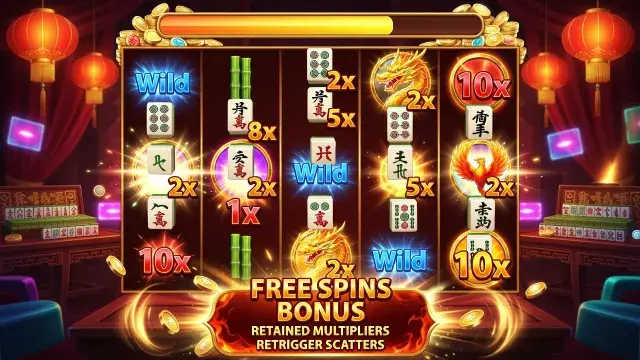
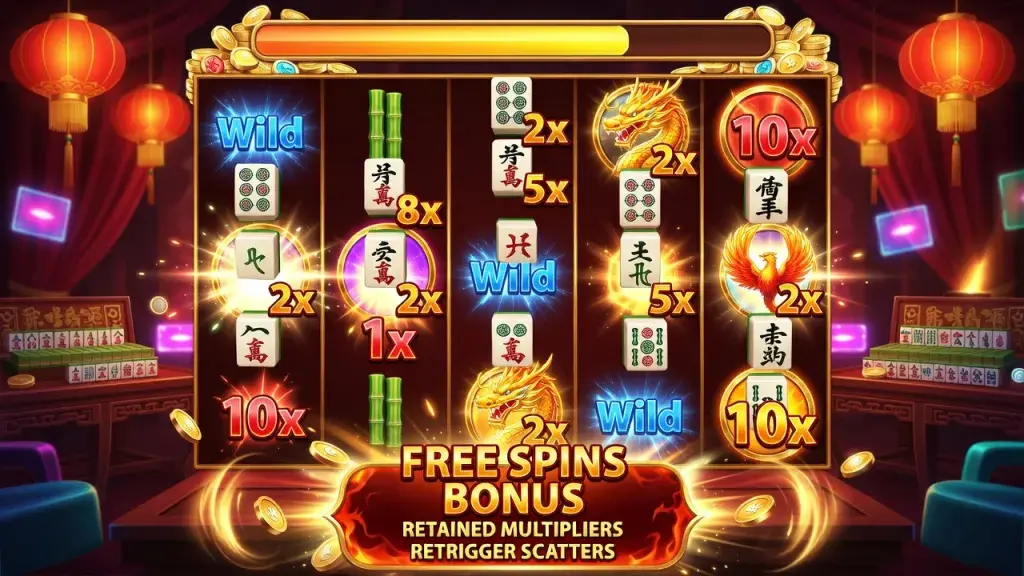
A single spin at maximum bet can theoretically return more than 25,000 times the stake - a ceiling few slot titles even approach. That number belongs to Mahjong Ways 2, a tile-themed slot built on a shifting reel grid rather than fixed paylines. The math behind that payout ceiling, and the mechanics that make it reachable, are what separate players who chase the number blindly from those who understand what actually drives it.
The game runs on a Ways system rather than traditional paylines, meaning matching symbols pay as long as they appear on adjacent reels regardless of position. Combine that with tumbling reels, where winning symbols vanish and new ones drop in to create chain reactions, and you get a volatility profile that rewards patience over impulsive betting. Anyone weighing whether the title's reputation for mahjong ways 2 max win potential is justified should look first at how the multiplier system compounds across a single spin before ever touching a real-money session. This guide breaks down how free spins, bonus mechanics, and the progressive jackpot interact to produce that outcome, and what a realistic strategy looks like in practice.
What follows separates the mechanical facts - how the reels behave, what triggers bonuses, how the jackpot pool works - from the behavioral choices that actually influence a session's outcome. Both matter. Understanding one without the other leaves money on the table or, worse, burns through a bankroll chasing a feature that was never close to triggering.
Understanding Mahjong Ways 2 Core Mechanics
Before any strategy makes sense, the base game structure needs to be clear. Mahjong Ways 2 uses a 5x4 reel layout with up to 1,024 ways to win, calculated from the number of symbols that can land on each reel position. Unlike payline slots where a win requires an exact sequence across a fixed line, the Ways system pays for any adjacent-reel match starting from the leftmost reel.
Reel Layout and Ways-to-Win System
Each of the five reels can display up to four symbols simultaneously, and the total combinations multiply out to the 1,024 figure. This matters practically: a wider spread of matching symbols across the grid produces more simultaneous winning ways, even from a single spin, without needing symbols in a precise line.
Tumbling Reels Explained
After a winning combination pays out, the involved symbols disappear rather than staying on the reels. Remaining symbols fall to fill the gaps, and new symbols drop from above. This can trigger a second win, a third, and so on within the same spin - each consecutive win in the sequence typically increases an in-round multiplier, which is where much of the game's payout potential accumulates.
Symbol Values and Paytable Basics
Symbols split into low-value tile icons (dots, bamboo sticks, characters) and higher-value mahjong-themed icons, with a wild symbol that substitutes for most others and a scatter that triggers the free spins round. Higher-tier symbols pay significantly more per match, so a tumble sequence that lands multiple high-value symbols compounds faster than one built on low-tier icons alone.
Mahjong Ways 2 Max Win Potential Explained
The headline number attached to this slot draws attention for good reason, but it only materializes under a narrow set of conditions. Reaching anything near the theoretical ceiling requires the free spins round, a long tumble chain, and an accumulating multiplier that stacks across many consecutive wins in one sequence.
How the Multiplier System Builds Toward Max Win
Each tumble within a winning sequence adds to a multiplier that applies to the next win in that same chain. In the base game this multiplier resets each spin, but during free spins it typically carries forward or grows more aggressively, which is the structural reason bonus rounds are where the largest payouts happen.
Realistic Expectations vs. Theoretical Ceiling
Hitting the maximum payout multiplier is a statistical outlier, not a routine outcome. Most sessions, even profitable ones, land nowhere near that ceiling. Framing the number as a target for every session sets up disappointment; treating it as the upper bound of a wide distribution is more accurate and more useful for managing expectations.
Bet Size and Its Effect on Max Win Outcomes
Because payouts scale directly with bet size, a higher wager doesn't change the odds of triggering a big multiplier chain - it changes the cash value of that chain if it happens. Players aiming for a shot at the top of the payout table need to size bets in line with a bankroll built to survive extended dry stretches between big rounds.
- Long tumble sequences in the base game rarely reach maximum multiplier tiers
- Free spins with retained or escalating multipliers are the primary path to top-tier payouts
- Bankroll depth matters more than bet size alone when chasing high-variance outcomes
Mahjong Ways 2 Free Spins Feature Breakdown
The free spins round is the engine behind most substantial wins in this game. It's triggered by landing a set number of scatter symbols on the reels, typically three or more, with additional scatters awarding extra spins.
Triggering the Free Spins Round
Scatter symbols can appear anywhere on the grid, not restricted to specific reels, which makes triggering the round somewhat more forgiving than slots requiring scatters on fixed positions. Landing four or five scatters instead of three typically grants a longer round outright, front-loading value before a single spin has even started.
Multiplier Progression During Free Spins
Where the free spins round differs meaningfully from the base game is in how the multiplier behaves across tumbles. Rather than resetting, it tends to climb with each consecutive win throughout the entire round, not just within a single spin. This is the mechanical reason mahjong ways 2 free spins sessions produce disproportionately large wins compared to base-game play.
Retriggering Free Spins for Extended Play
Landing additional scatters during the free spins round itself can extend the feature further, adding more spins on top of the original award. A retrigger, combined with an already-elevated multiplier, is typically when the largest single-round payouts occur - the two mechanics compound rather than simply add together.
Mahjong Ways 2 Bonus Features and Special Symbols
Beyond free spins, the game includes supporting mechanics that shape how often and how large wins land across a session.
Wild Symbol Functionality
The wild substitutes for standard symbols to complete winning ways, and in many configurations it can appear during tumbles just as easily as on the initial drop. Its presence mid-tumble can turn what looked like a dead reel into an extension of an active win chain.
Scatter Symbols and Their Dual Role
Scatters serve two functions: they pay out directly when enough land on the grid, and they trigger the free spins round. This dual role means scatters carry value even outside of the bonus round itself, adding a layer of return that base-game statistics alone don't capture.
Bonus Buy Option Considerations
Some versions of the game offer a bonus buy feature, letting players pay a set multiple of their bet to enter the free spins round directly rather than relying on scatter drops. This changes session math substantially - it trades a large upfront cost for guaranteed access to the game's highest-value mechanic, and it's worth treating as a distinct bankroll decision rather than a routine part of play.
Mahjong Ways 2 Progressive Jackpot System
Separate from the base game's own payout ceiling, some platforms offering Mahjong Ways 2 tie the title into a progressive jackpot network, where a portion of wagers across the connected player pool feeds a growing prize.
How the Progressive Pool Accumulates
A small percentage of every qualifying bet across the network contributes to the jackpot total, which climbs continuously until someone triggers the win condition. Because the pool draws from many players simultaneously, it can grow substantially faster than any single-player session would suggest.
Jackpot Trigger Conditions
Triggering conditions vary by platform but generally involve either a random selection mechanism independent of the base game's symbols, or a specific rare in-game event. This separates the mahjong ways 2 progressive jackpot from the slot's own maximum multiplier payout - the two are different systems with different odds, and conflating them leads to unrealistic expectations about how often either occurs.
Jackpot Odds vs. Standard Max Win Odds
Progressive jackpots are rarer events than the game's own top-tier multiplier wins, precisely because they draw from a much smaller set of trigger conditions across a much larger pool of participants. Treating the jackpot as a realistic session goal, rather than a rare bonus outcome, misreads how the mechanic is designed to function.
Practical Strategies for Playing Mahjong Ways 2
None of the mechanics above translate into guaranteed results, but understanding them supports better decisions about bet sizing, session length, and when to walk away.
Bankroll Management for High-Volatility Slots
Given the swings this title produces between dry spells and tumble chains, a bankroll should be sized to withstand extended losing sequences without forcing an early exit before a potential free spins trigger. Betting a small, consistent fraction of total bankroll per spin preserves the ability to keep playing through variance rather than being pushed out early.
When to Consider the Bonus Buy Feature
The bonus buy option makes sense primarily for players with a bankroll built to absorb its higher cost per attempt, since it removes the wait for scatters but doesn't improve the odds of a large multiplier once inside the round. It functions better as an occasional accelerant than a default way to play.
Session Length and Realistic Goal-Setting
Setting a win target and a loss limit before starting a session, and honoring both, protects against the natural pull to keep spinning after a big tumble chain or through a long dry stretch chasing the free spins trigger. This single habit does more to protect long-term results than any specific bet-sizing formula.
Frequently Asked Questions
Is Mahjong Ways 2 harder to win on than payline-based slots?
Not inherently - the Ways system actually creates more simultaneous winning combinations per spin than a fixed payline structure. The higher volatility comes from the tumble and multiplier mechanics, which concentrate payouts into fewer, larger events rather than spreading them across more frequent, smaller wins.
How many scatters are needed to trigger free spins?
Typically three scatter symbols anywhere on the grid trigger the round, with four or five awarding a longer session upfront. Landing additional scatters during the round itself can extend it further through a retrigger.
Does the bonus buy feature guarantee a big win?
No. It guarantees entry into the free spins round but not the size of the multiplier chain that follows. It removes the uncertainty of triggering the feature naturally, not the variance within the round itself.
Is the progressive jackpot the same as the game's maximum multiplier win?
No, these are separate systems. The maximum multiplier win comes from the base game or free spins tumble mechanics, while the progressive jackpot draws from a separate pooled prize funded across many players, with its own distinct trigger conditions.
What's a reasonable bet size relative to bankroll for this game?
Given its high volatility, a smaller fraction of total bankroll per spin than you'd use on a low-volatility slot is generally sound practice, since it allows more spins to survive dry stretches before a potential tumble chain or free spins trigger.
Does higher bet size improve the chance of triggering free spins or the jackpot?
Bet size doesn't change the probability of scatter symbols landing or a jackpot trigger occurring - those are governed by the game's underlying odds, not wager amount. It only affects the cash value of whatever outcome occurs.